Nature’s Renewal — Aloe Skin Benefits — Why Aloe Continues to Earn a Place in Thoughtful Skincare
Aloe vera remains one of skincare’s most familiar ingredients, but its continued relevance is about more than familiarity. Recent coverage has again highlighted the range of skin-related research around aloe—and an equally important principle: good skincare starts with what the skin needs, not with marketing labels.
A recent Google Alert on Aloe Skin Benefits surfaced two interesting pieces that reinforce ideas we care about at Nature’s Renewal.
One article, “Applying aloe vera on bruises: What Acharya Balkrishna says,” noted that research around aloe has expanded into areas including wound-related research, antioxidant effects, and other skin-focused applications. That does not mean aloe should be treated as a medical treatment for an injury, but it does help explain why aloe continues to attract attention in skin research and formulation.
A second article on men’s grooming made a different—but very useful—point: skin type matters more than the word “men” on the bottle. The article noted that dry skin generally benefits from products selected for the needs of dry skin, and aloe vera appeared among the ingredients discussed.
The Bigger Idea: Ingredients Should Have a Purpose
That principle fits closely with how we think about formulation at Nature’s Renewal.
We are less interested in putting an ingredient into a formula because it is fashionable or recognizable. We are more interested in asking what role it is supposed to play, how it works with the rest of the formula, and whether it helps us create a product that is comfortable, useful, and appropriate for its intended purpose.
Aloe is a good example because it can serve as part of a broader skin-comfort and hydration strategy while also fitting naturally into formulations designed to feel light and refreshing.
Skincare Should Be Built Around Skin
The second article also highlights something consumers can easily overlook: skincare does not need to be divided into overly rigid marketing categories.
A person with dry skin needs a formula appropriate for dry skin. Someone who prefers a lighter daytime product may want a different texture than someone looking for a richer nighttime routine. Mature skin, outdoor exposure, cleansing habits, climate, and personal preference can all matter more than the label placed on the front of the bottle.
That is one reason we focus so heavily on formulation purpose rather than simply adding ingredients to create a longer ingredient list.
Why Aloe Remains Central to Nature’s Renewal
Aloe continues to fit our approach because it works well with the philosophy behind the brand:
- Start with purposeful ingredients.
- Build formulas around what the product is supposed to accomplish.
- Avoid unnecessary complexity.
- Think about how ingredients work together rather than in isolation.
- Keep learning as new research and formulation information becomes available.
As our Skin Science & Lab Intelligence section grows, we’ll continue looking at new research, ingredient developments, formulation ideas, and skincare trends—and explaining what they may actually mean in practical terms.
Because better skincare should begin with better understanding.
Suggested category: Our Ingredients / Lab Science
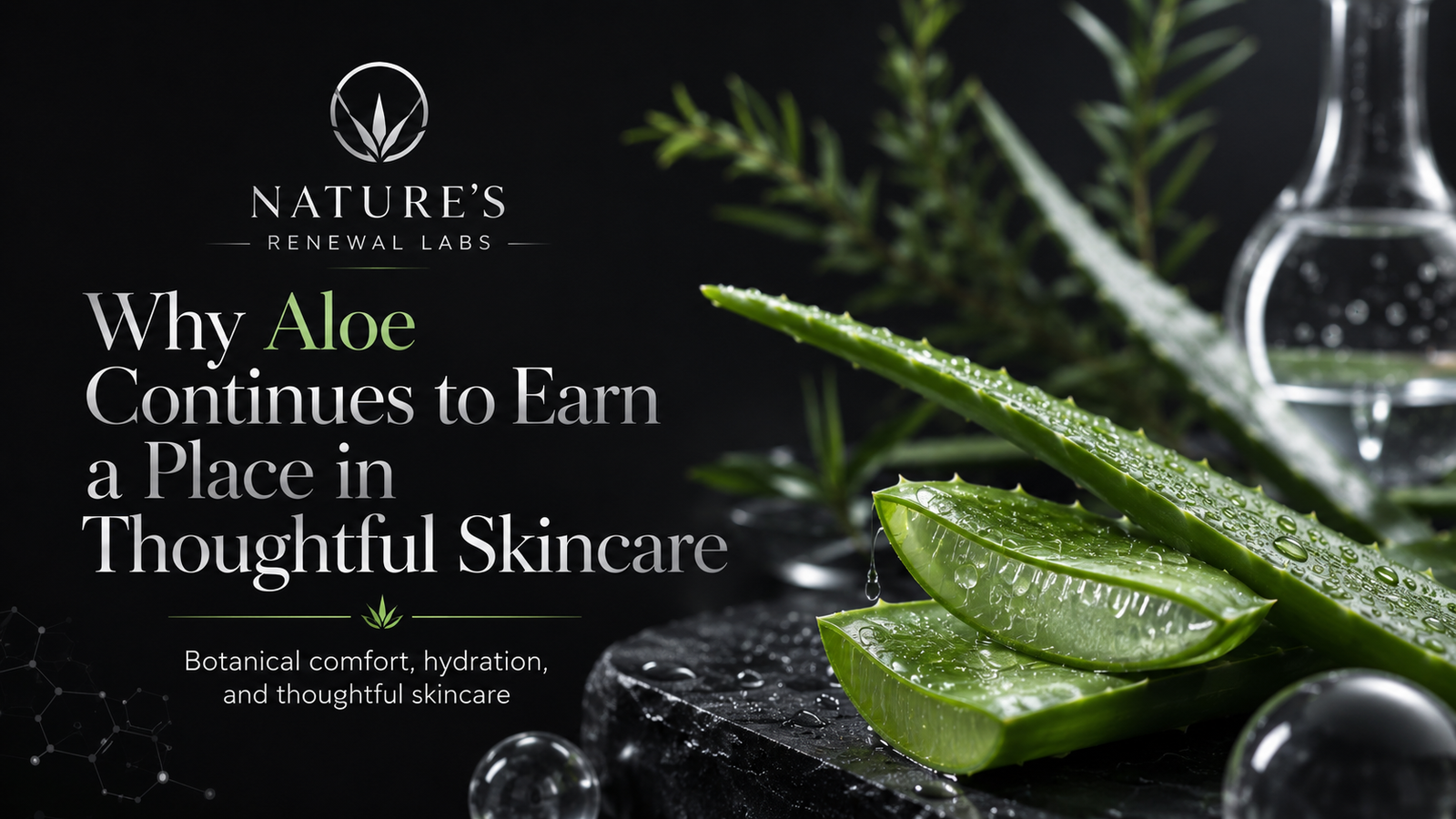
Suggested featured image: Black-and-silver laboratory scene with aloe leaves, glassware, and subtle molecular graphics.
Source alert: Google Alert — “Aloe Skin Benefits,” August 22, 2026. The alert highlighted coverage from The Statesman discussing aloe-related skin research and Gulf News emphasizing that skin type matters more than gender-based product labeling.
Editorial note: Keep claims cosmetic/educational. Do not state that aloe treats bruises, wounds, or medical conditions.